








Renovating a swimming pool is no straightforward matter!
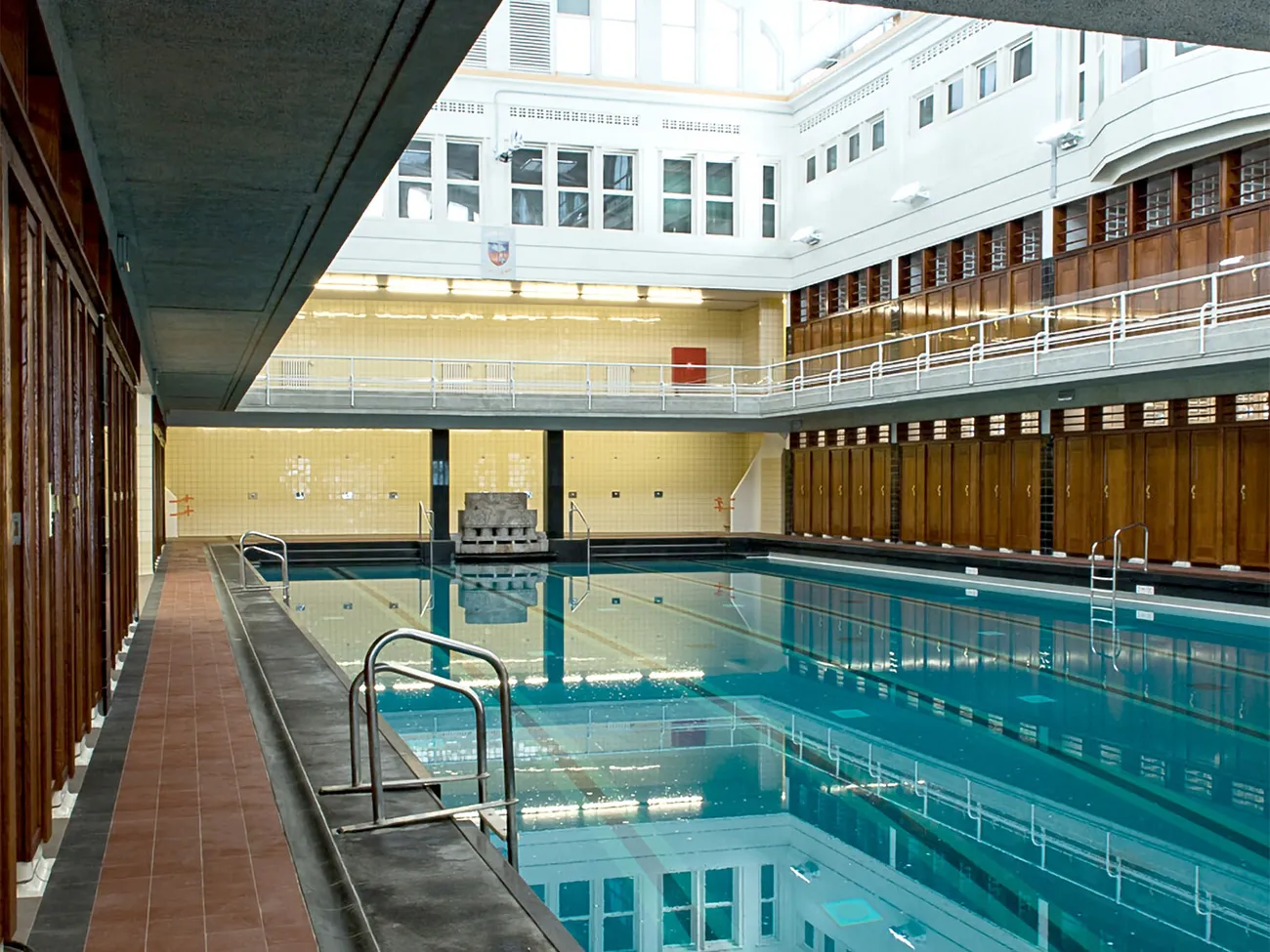
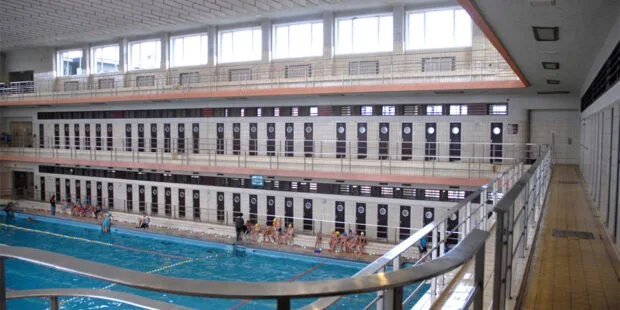
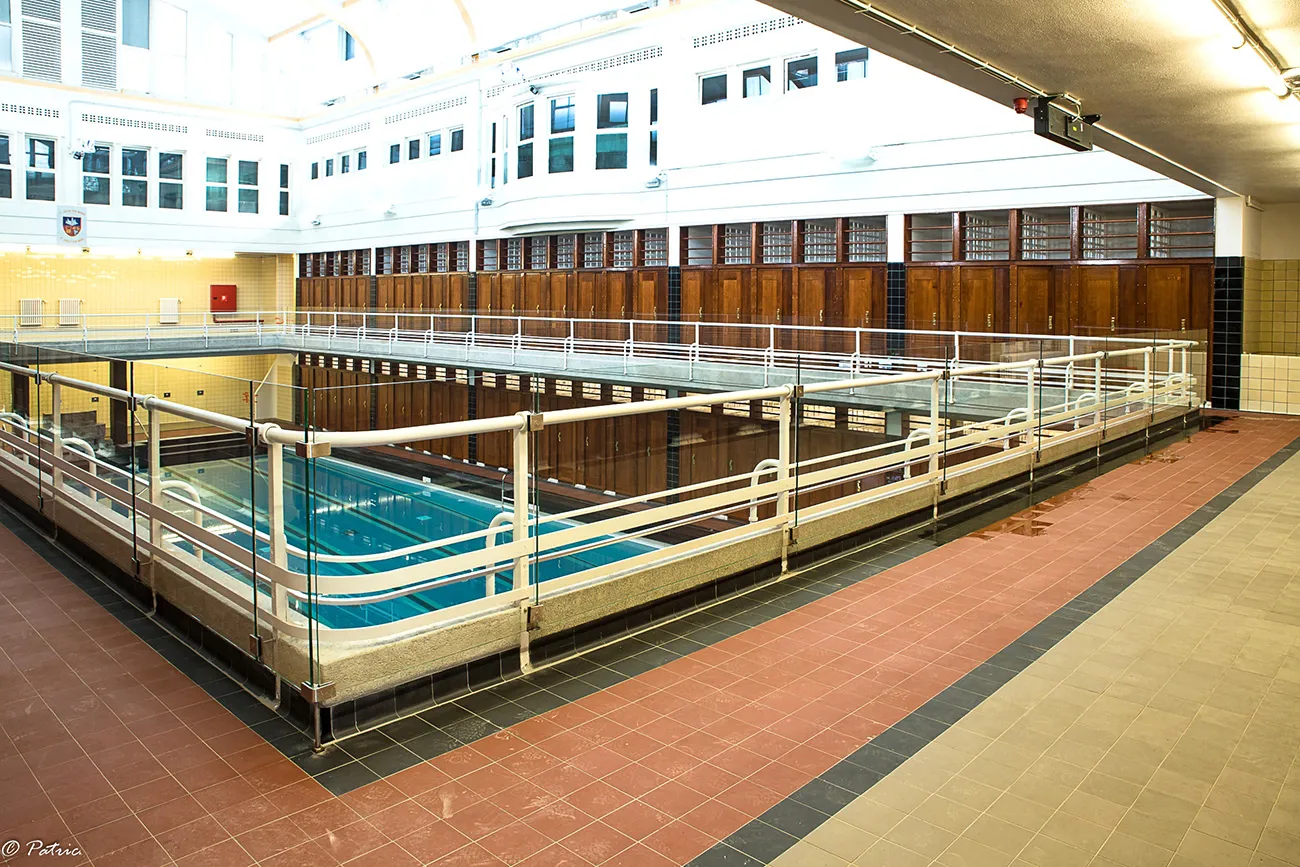
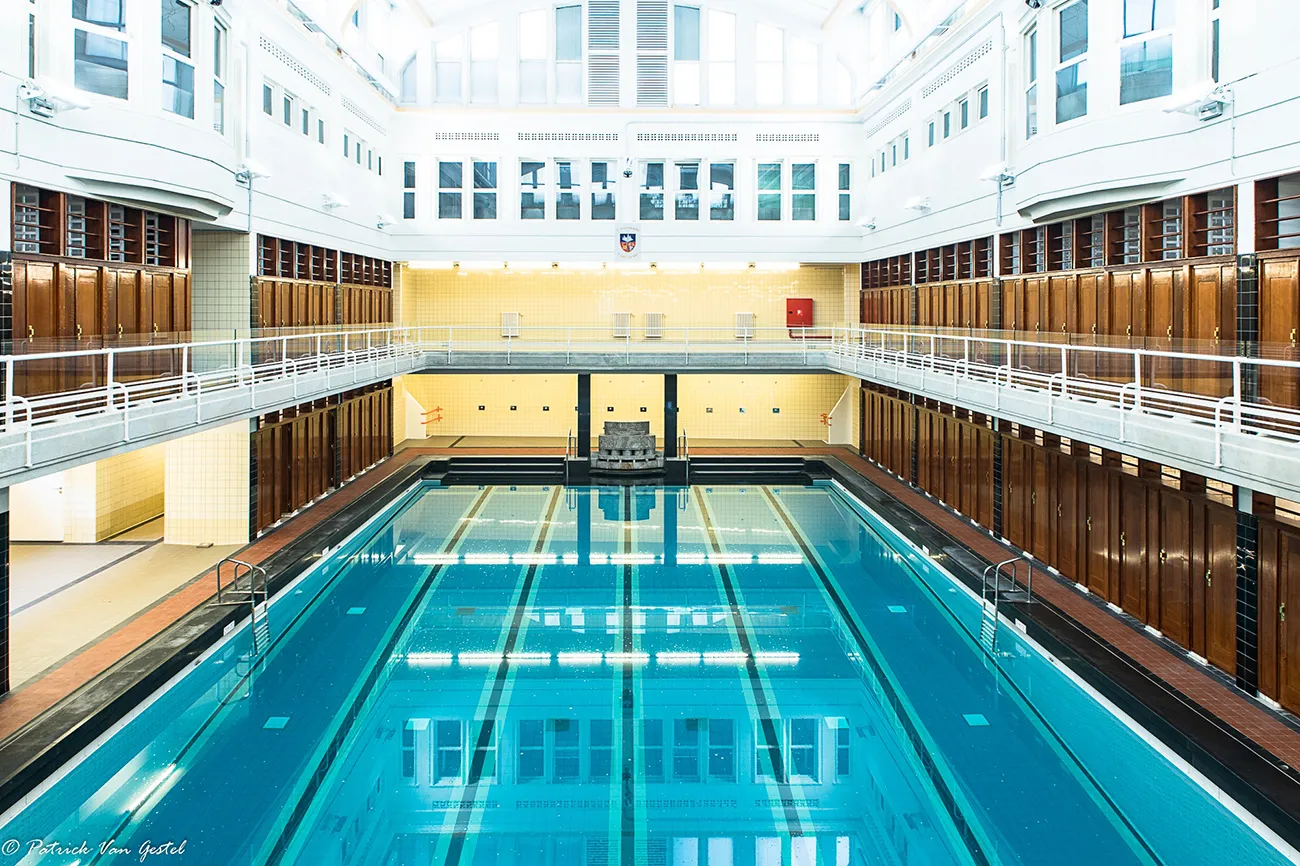
Les Bains de Saint-Josse, also known as Piscine communale Saint-François, is undergoing renovation and is due to reopen in September. Built between 1930 and 1933 on the site of three alleyways, to plans by architects Bytebier and Schaessens, its opening marked the end of a process that began in 1912, when the municipality considered building its own bathing facilities. The venue combined an indoor swimming pool, Turkish baths and individual shower baths, following the tradition of building public baths, particularly in working-class districts, to promote public hygiene.
Piscine Saint-François is a fine Art Deco example of this characteristic type of bathing establishment. Its aesthetic and historical significance led to its designation as a listed monument on 4 June 2009. However, successive alterations, conservation problems and leaks in the pool tank had compromised the building and led to its closure in 2010. A restoration project was then prepared in consultation with the DMS and the CRMS, culminating in a single permit for the restoration being issued on 31 January 2017. The work was carried out by ACH Construct.
The design was entrusted to AAC Architecture, a practice with extensive experience in renovating listed buildings (Théâtre du Parc, Théâtre de Toone, brasseries Wielemans…) and swimming pools (Ixelles, Saint-Gilles…). Céline Vandewynkel, architect-engineer at AAC: «At first, the project was mainly concerned with the technical issue of making the pool tank watertight. However, we highlighted the building’s architectural and historical significance. Brussels’ first swimming pools are closely linked to the development of the city and society. Renovating them presents a major technical challenge: restoring and treating old concrete in a chlorinated environment. Durable solutions exist and should serve as an example for preserving historic swimming pools. The restoration work at Piscine de Saint-Josse went well beyond the pool tank. The entire building has been returned to its original state. Alterations made in the 1970s have been removed. The project has brought together architectural, technical, historical and social interests.»
Technical and other challenges
Renovating a swimming pool of this type presents several major challenges. Thierry Dupont, site manager for ACH Construct: «The building is listed both inside and out. This meant carrying out extensive work on the building while preserving its heritage features and existing technical systems, such as the water filtration system and ventilation.»
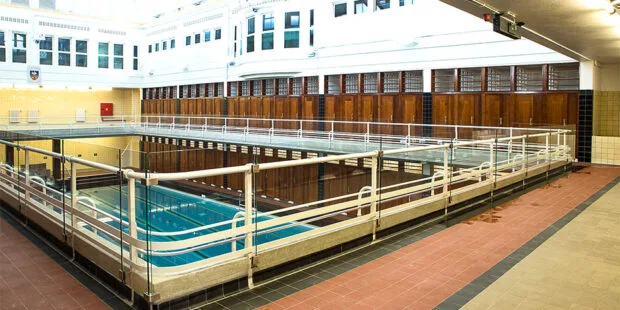
Céline Vandewynckel: «The first challenge is stability. In a swimming pool, even the slightest instability can trigger a chain reaction: it causes cracks, which compromise the watertightness, leading to leaks of chlorinated water that attack the structure and cause further cracks, and so on. Until the pool tank is completely stable, we cannot ensure lasting watertightness, and unless it is fully watertight, there is no point in carrying out durable repairs to the structure. Overall watertightness is another challenge: preserving the original tiles is essential to retain the atmosphere of historic swimming pools. However, they are not watertight. To preserve the tiles while ensuring perfect watertightness, seamless resin is applied beneath them to act as a waterproofing layer. The tiles are then relaid on top. Finally, hygiene standards and new requirements must be met, including the separation of dry-foot and wet-foot areas. Rather than building new passageways, we have created areas where swimmers can remove their shoes. This preserves the traditional layout, with changing cubicles surrounding the pool.» The cubicles have also been restored, and the Formica doors replaced with solid wood ones. Finally, an anti-drowning detection system has been installed, and accessibility for people with reduced mobility has been improved by adding a lift.
The project brought a few surprises, as Thierry Dupont explains: «Removing suspended ceilings and partition walls revealed large areas of terrazzo. The project was amended to showcase them. Structurally, all the floors had to be reinforced using a wide range of techniques to preserve the heritage features as far as possible.»
The Brussels-Capital Region is subsidising 80% of the restoration work, to a total of around €1.295 million.
Question about this story? Ask your question
Keep following this
Get an email when a new story is published. No account needed.
- ThemePool maintenance and renovation
- SubjectProjects