








The energy crisis is driving pool owners towards fossil-free heating

Despite the hot, dry summers of recent years, swimming without heating your pool remains the exception in our corner of the world. Those who want to swim more often than on the hottest days of the year still opt for a heated outdoor pool. However, the way in which this large volume of water is heated has changed considerably in recent years. The recent energy crisis has only accelerated this trend.
As with a house, there are several ways to heat a swimming pool. The size of the pool, or more precisely its water volume, the desired temperature, how often it is used and the planned length of the swimming season all help determine the options available and the power output required. For users, however, the key considerations are comfort, energy consumption and peace of mind.
Energy consumption is also driving the replacement market
While pools in the past were mainly heated using a heat exchanger connected to a gas or oil boiler, new pools have for some time now increasingly favoured solutions that use little or no fossil fuel. This trend is driven less by purely environmental considerations than by financial factors. Heating a pool with gas, oil or even a fully electric heat exchanger offers exceptional comfort, with the water temperature able to rise by 10 °C in a single day, but energy consumption is particularly high, leading to a substantial increase in energy costs.
Given the soaring gas and electricity prices last year, it is no surprise that owners of existing pools are becoming increasingly concerned about their energy consumption. They, too, are starting to look for alternative heating solutions. The replacement market is where pool builders face their biggest challenge today, but also their greatest potential.
Heat pumps: a rapidly evolving standard
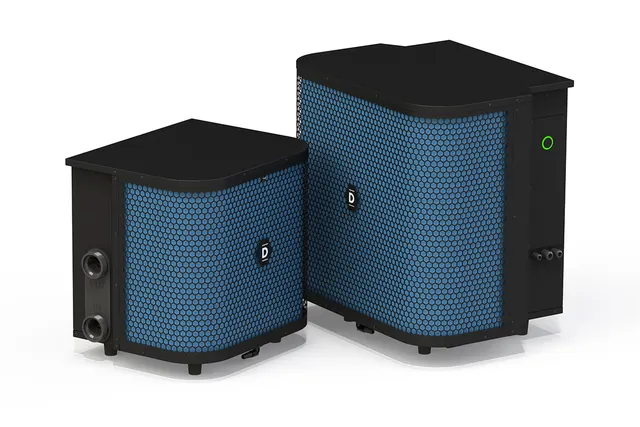
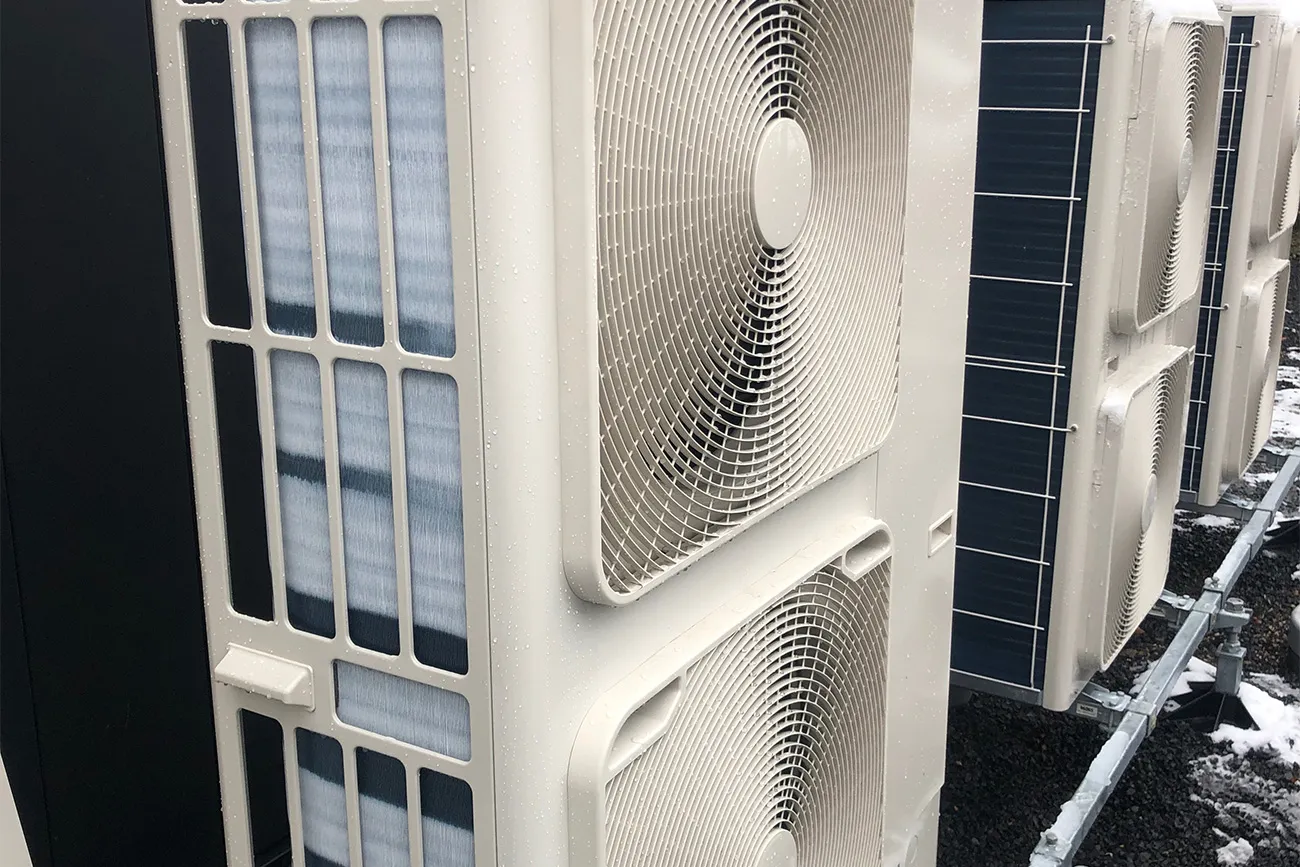
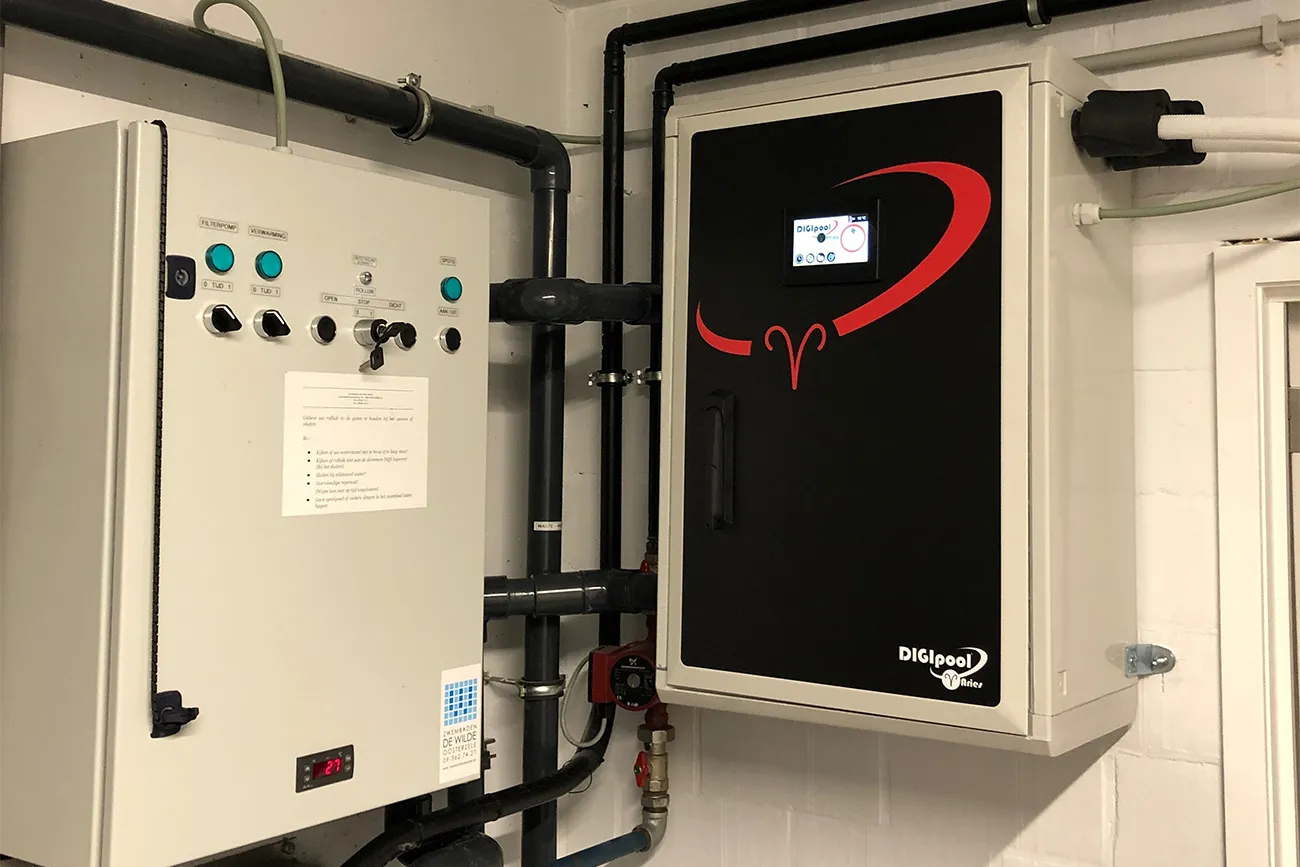
If efficiency and energy consumption are the priorities, a heat pump is almost by definition the choice. By extracting heat from the outside air and transferring it to the pool water, a heat pump can deliver more energy in the form of heat than it consumes in electricity. Heat pumps have therefore become the standard for pool heating in recent years. Most pool owners are happy to accept that a heat pump heats the water slowly, and that it takes longer, often several days at the start of the season, to bring it up to temperature than with, for example, gas heating.
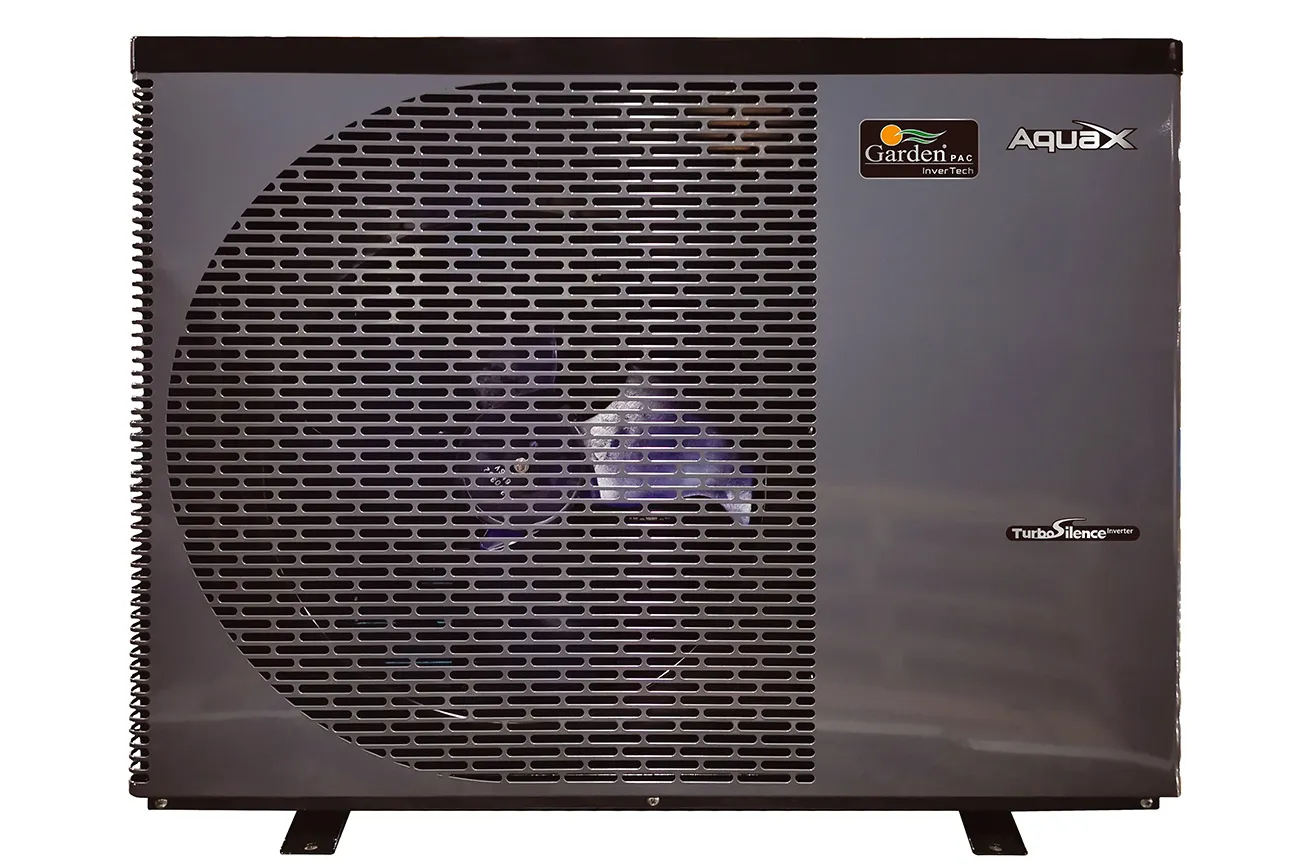
However, not all pool heat pumps are the same. There are significant differences in efficiency and the quality of the materials used. It is also important to distinguish between on-off heat pumps and the newer full inverter models. In just a few years, the market has moved from models that could only run at full power, through units with several operating modes, to heat pumps that continuously adjust their output to meet demand. As a rule, these so-called “full inverter” heat pumps are so much more efficient than on-off models, and even older inverters, that in many cases it is worth replacing a heat pump that is only a few years old with a full inverter model. Full inverters also tend to run more quietly.
There is another important factor: the effect of the outside temperature. The colder it is outdoors, the less heat a heat pump can extract from the air. It is therefore important to understand that the high efficiency promised by the heat pump manufacturer can only be achieved at the specified outside temperature. If it is colder, the heat pump’s efficiency will also fall. At temperatures below 10-15 °C, most heat pumps are no longer cost-effective and often simply cannot bring the water up to temperature, although heat pumps specifically designed to operate at lower temperatures, and therefore all year round, are available on the market.
Valuable solar energy
It is no surprise that many people wonder whether the sun might ultimately be the answer. After all, most pool owners feel like taking a dip on sunny days. And isn’t solar energy largely free?
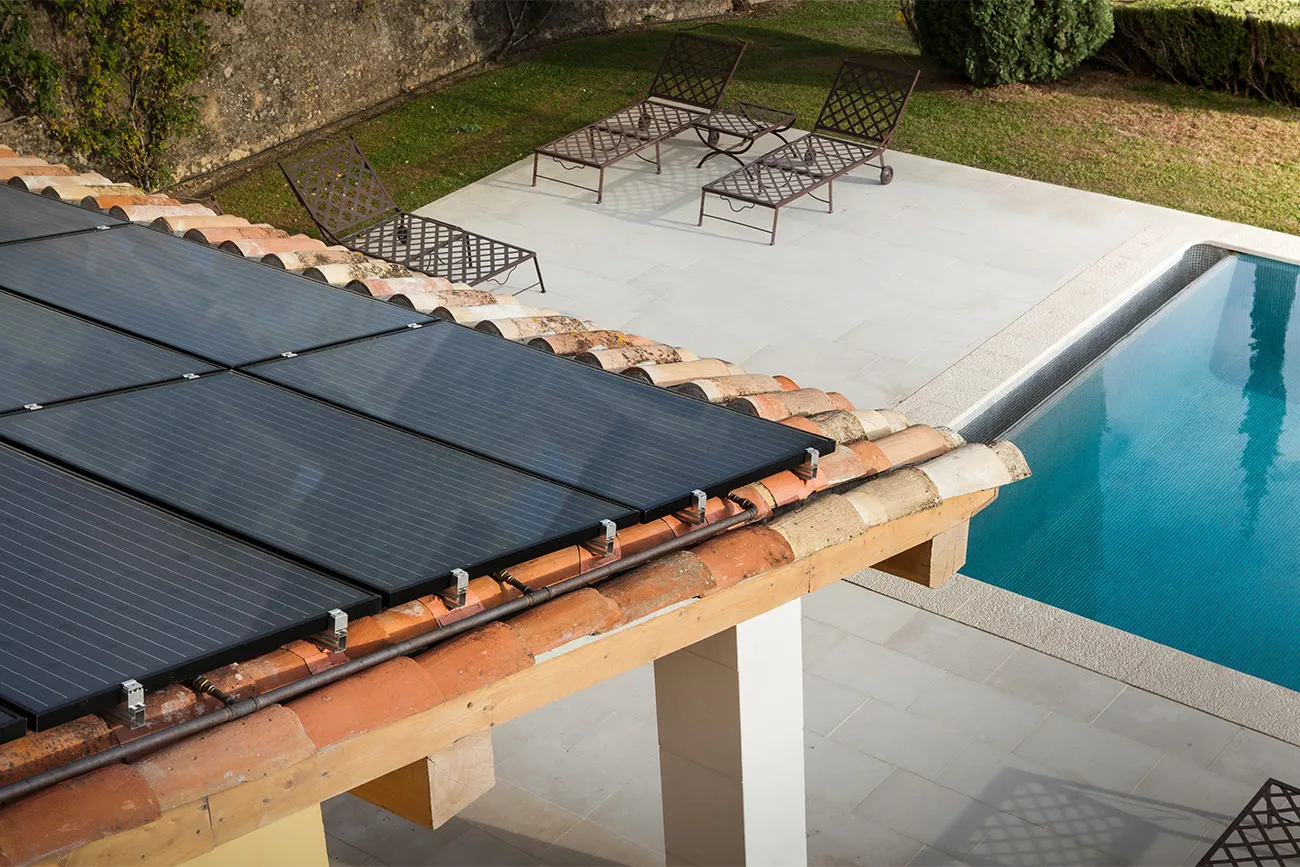
Accessible solutions such as solar mats and solar pool covers can help with efficient or energy-neutral heating, but they cannot bring an entire pool up to temperature. Solar collectors combined with a heat exchanger or a solar water heater are a more suitable option. According to Belsolar, the Belgian association of producers and suppliers of solar energy systems, solar collectors can produce enough energy on a hot summer’s day to bring a pool to a comfortable temperature of around 28 °C. From May to September, they can supply more than half of the energy required. What’s more, connecting the solar collectors to a domestic hot water system means that any surplus heat, for example when the pool is not being heated, can also be used to heat domestic hot water.
From product to system
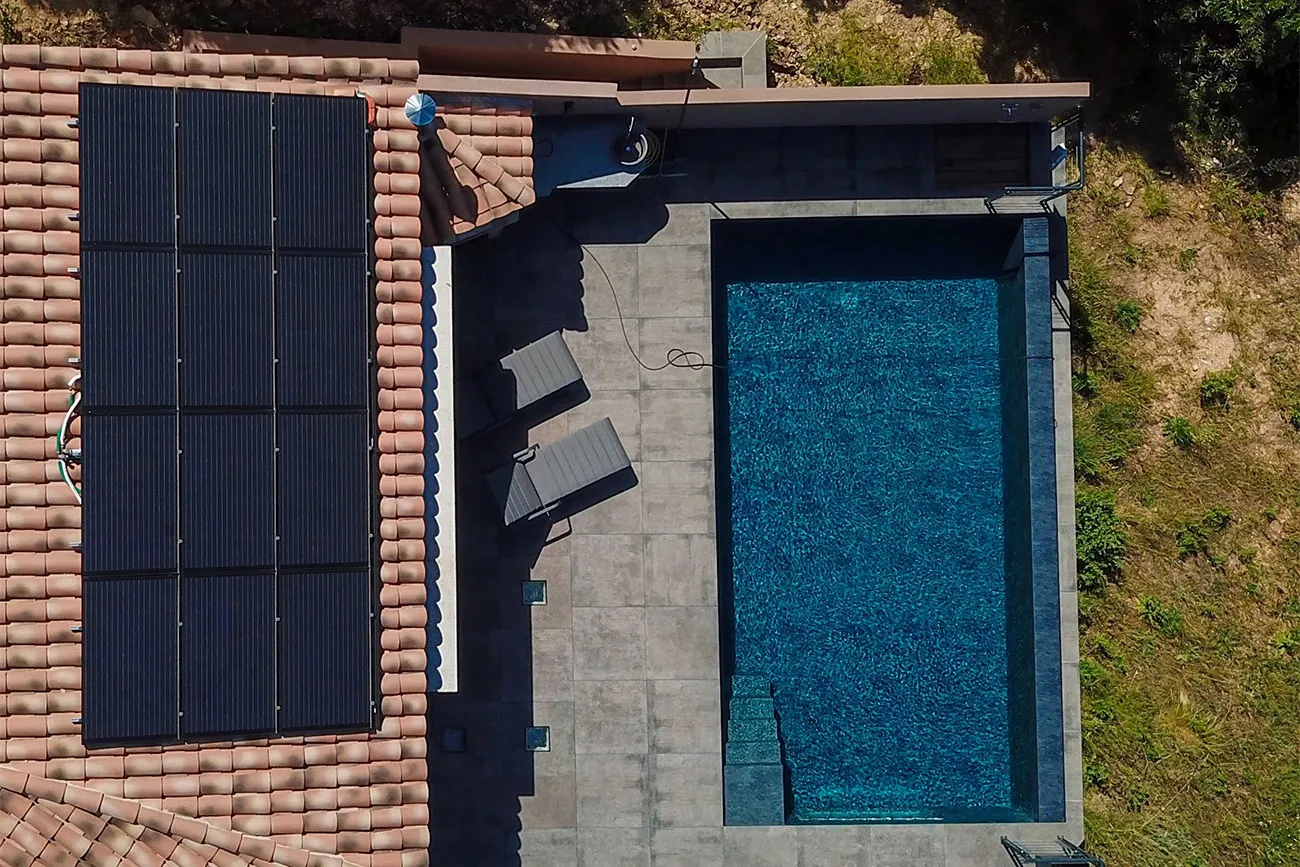
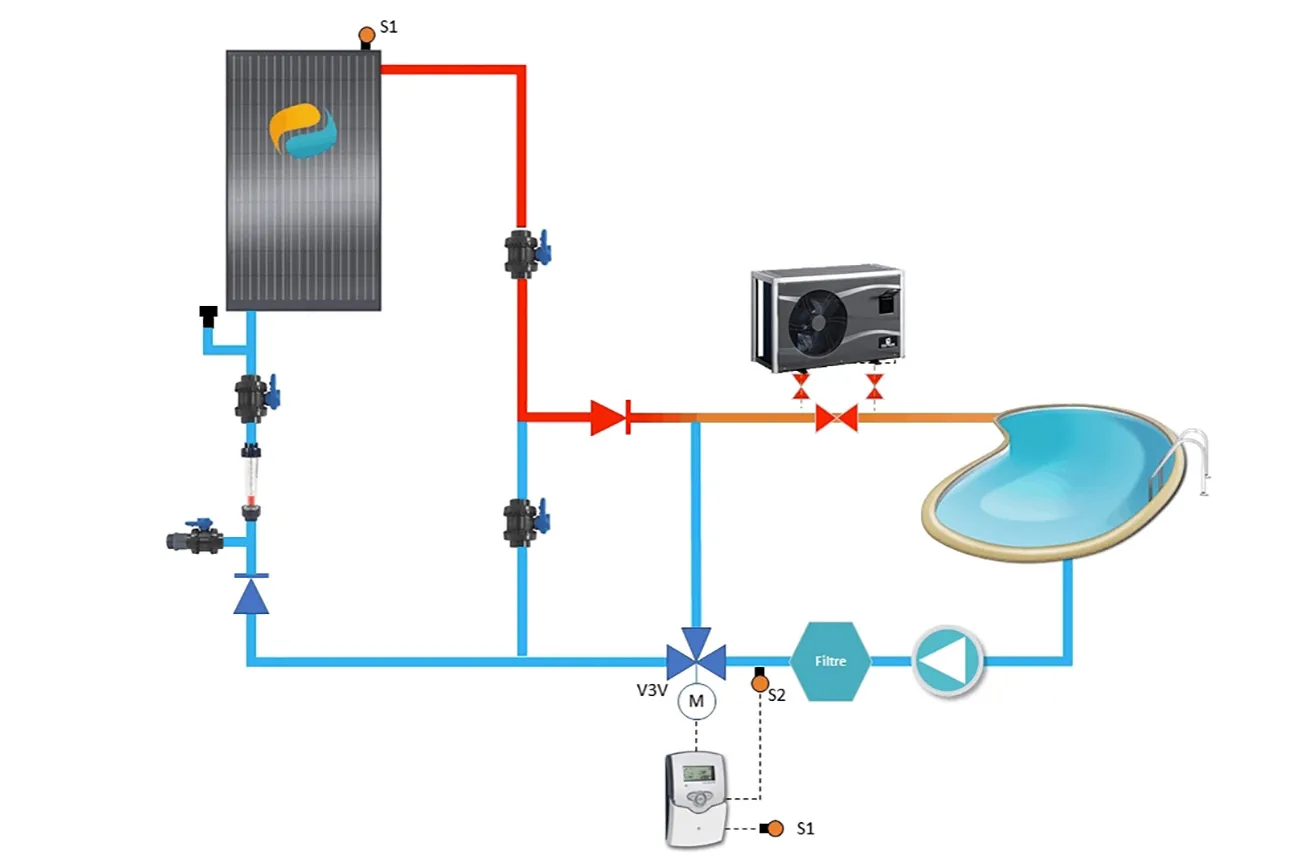
The most significant change in pool heating, however, is not at product level. The energy transition and the energy crisis are instead forcing us to look beyond the product. Many pool builders already point out to clients, for example, that it is impossible to heat a pool efficiently without an insulating cover, and combining a heat pump with photovoltaic panels is now well established.
You can go further by combining a heat pump with photovoltaic panels and solar collectors, whether or not they are integrated into a single hybrid solar panel, or by connecting the system in a more sophisticated way to a solar water heater for domestic hot water or other parts of the home’s systems. Ultimately, integrating different technologies and applications, including the home’s own energy systems, is the way to achieve the optimal energy balance, although with configurations becoming increasingly complex, the involvement of an energy specialist will become ever more important.
Question about this story? Ask your question
Keep following this
Get an email when a new story is published. No account needed.
- ThemePool heating and climate control
- SubjectNews