








Pool automation and lighting in and around the pool: benefits and key considerations
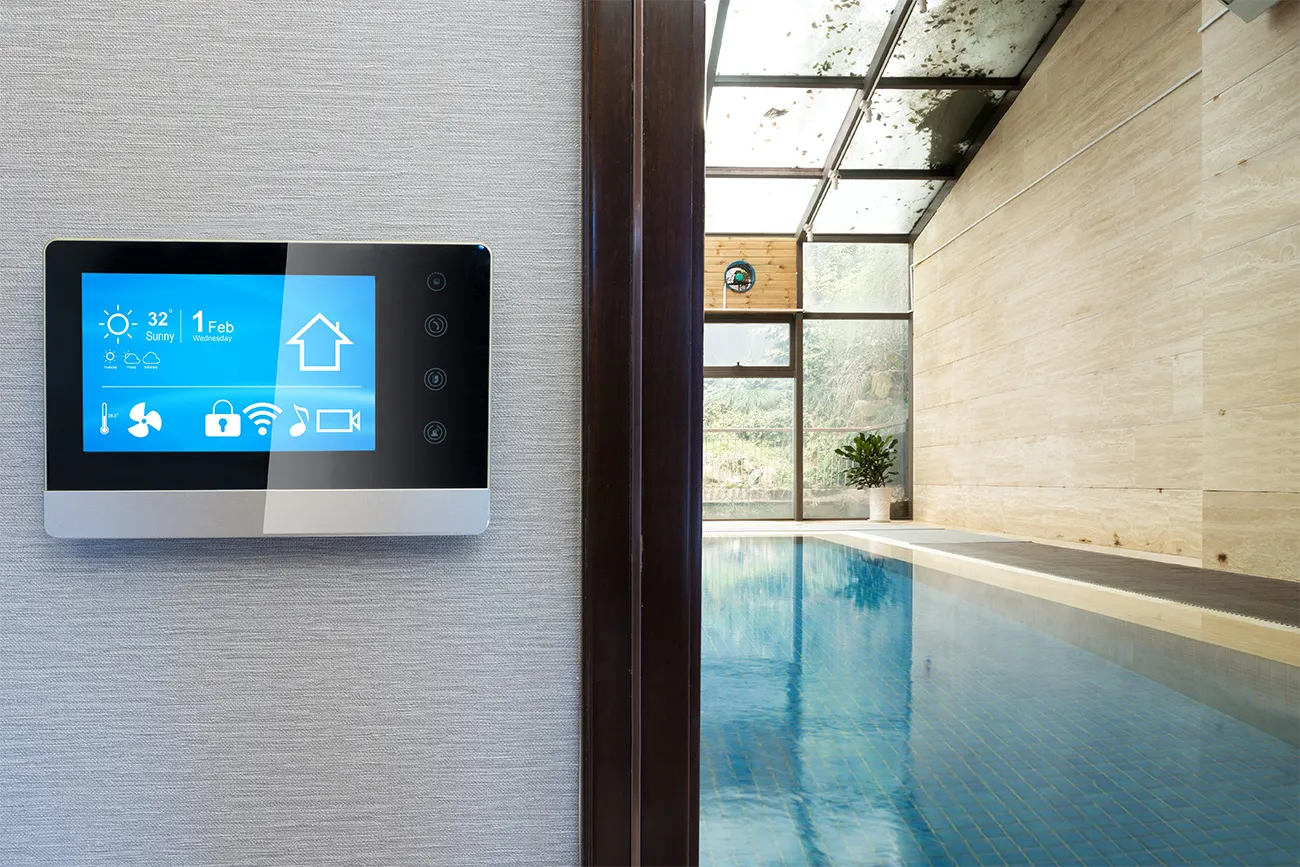
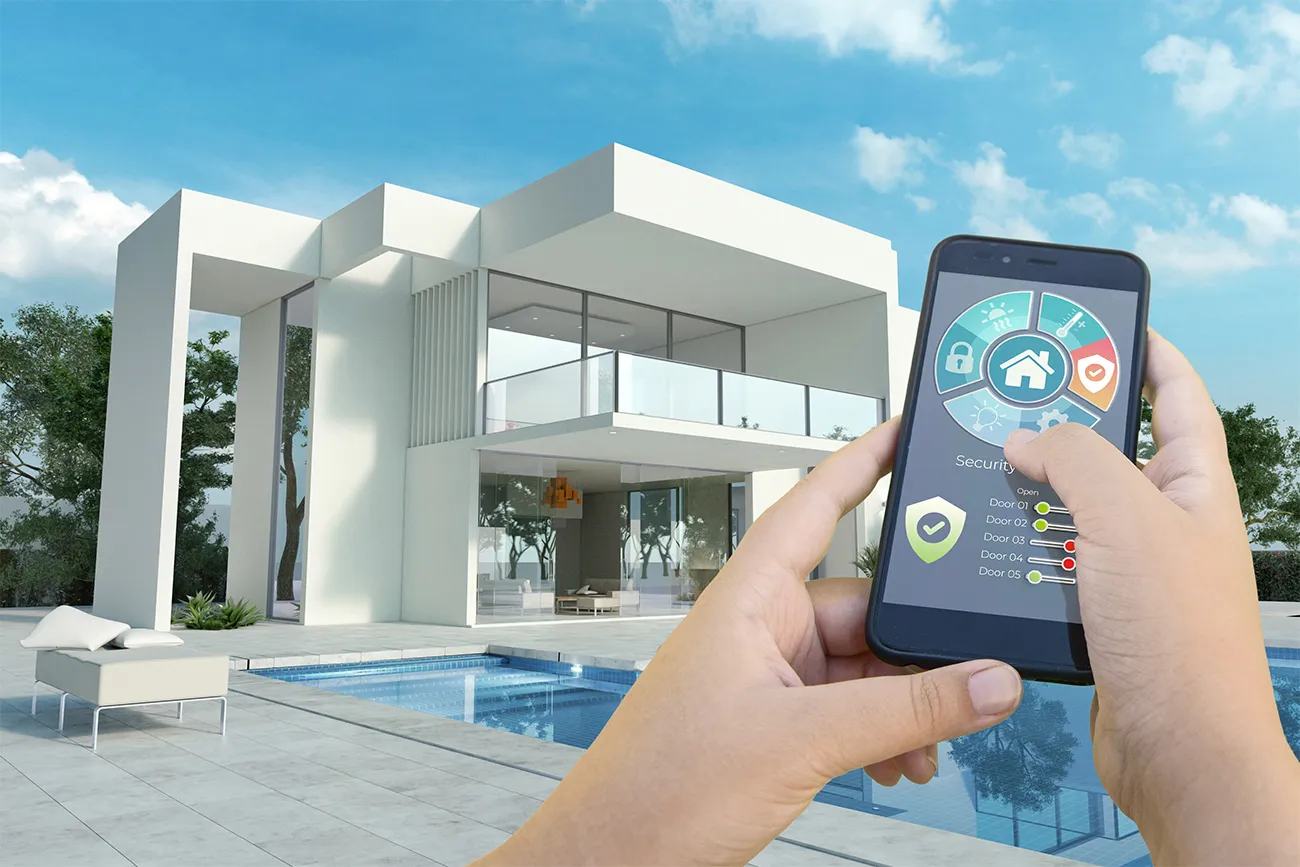
More and more of us are controlling our heating, lighting and even household appliances remotely. This digital transformation is also making itself felt in the pool sector. Pool automation offers numerous benefits for both pool builders and end users. The result is greater comfort, improved safety and more efficient energy use.
A well-designed automation system means greater comfort for you and the pool’s end user. Pool automation lets you manage and remotely monitor a wide range of settings: filtration, heating, pH, chlorine levels, pool lighting, the cover and even the counter-current swimming system, if the pool has one. The range of smart applications enhances comfort, safety and convenience, bringing greater peace of mind. What’s more, end users can save on energy and maintenance costs by using equipment more efficiently.
Gone are the days of laborious, intensive pool maintenance and cleaning. Technological innovations and automated applications make dosing and testing easier and much more precise. This also benefits the health and wellbeing of pool users. In public pools, cleaning robots and innovative, automated monitoring systems make all the difference.
Getting to work with pool automation
Thinking of offering pool automation to your clients? Bear in mind that each application has its own app. If you’re combining several functions, it may be worth choosing an integrated system that centralises everything. This makes life easier for both you and your client.
As a professional pool builder, you can showcase your services by using automation intelligently. Some systems, for example, send you an alert if there is a problem with an installation. As these smart systems become increasingly widespread in pool construction, ongoing training is more important than ever. Installing a pool calls for a wide range of skills, with installers having to juggle everything from making the pool watertight to setting up digital applications.
Underwater lighting
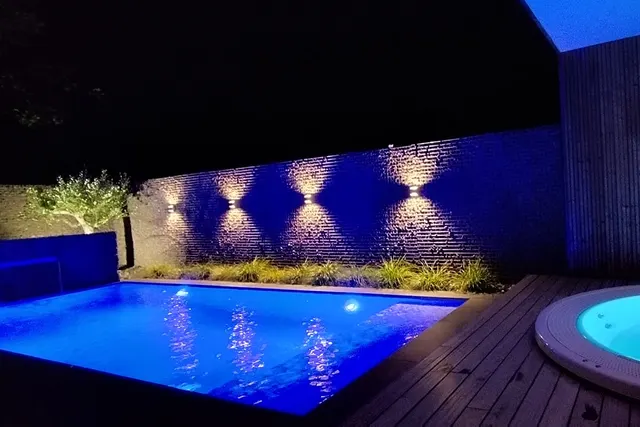
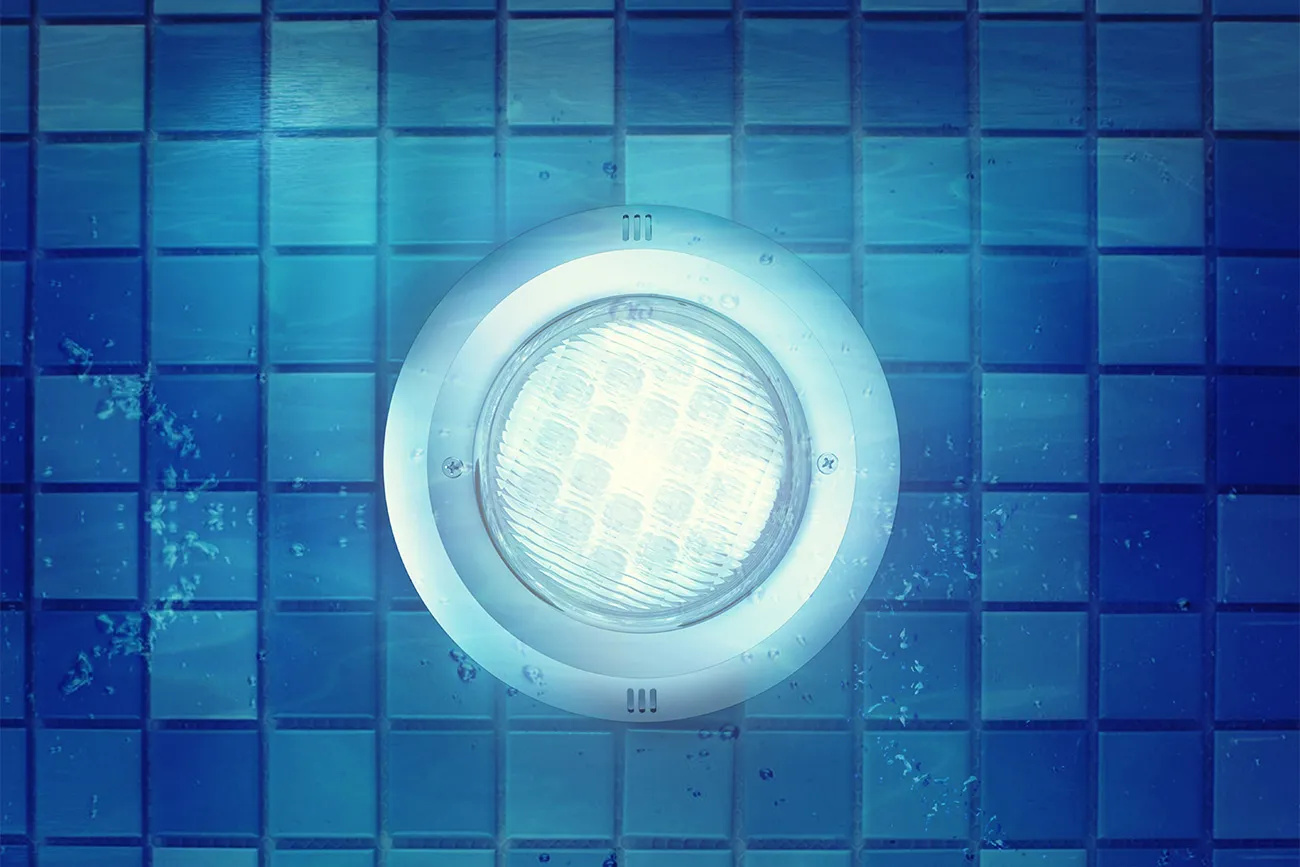
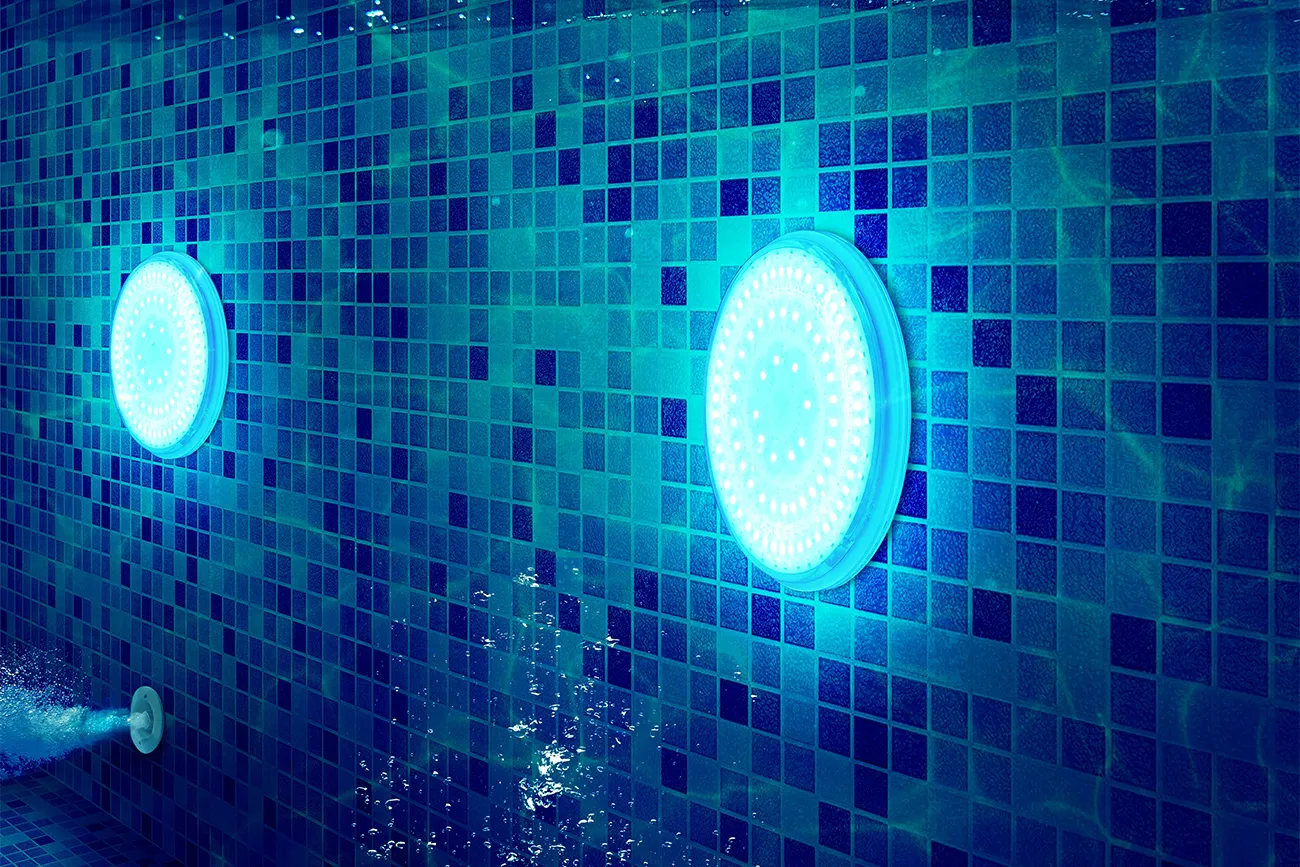
Underwater LED lighting is essential for taking your client’s aquatic paradise to the next level. Carefully chosen lighting makes swimming enjoyable even in the evening and turns the pool into a real centrepiece. When it comes to underwater lighting, you can choose between recessed and surface-mounted spotlights. Recessed spotlights are the most popular, as they sit flush with the pool walls and reduce the risk of injury.
As a rule, one spotlight every three or four metres is enough to light a pool. This is because water acts as a reflector. In line with current trends, underwater lights are getting smaller. Installation methods are therefore being optimised to allow more small light fittings to be installed in each pool.
Lighting for public pools
Everyone knows that underwater lighting must withstand moisture, chlorine and heat. But general lighting in a pool building is also exposed to these conditions. Standard light fittings are not robust enough to withstand moisture, chlorine vapour and heat. The heat, which can easily reach 45 °C beneath the ceiling of a swimming pool hall, causes the lifespan of LED light sources to decrease exponentially. High humidity can also lead to faults, failures and corrosion. Combined with chlorine, it can create a layer of chlorinated moisture that affects not only the light fittings, but also fixings and components such as LEDs, circuit boards, power supplies and drivers. International and national standards for safety and materials in swimming pools have been adopted to ensure product durability and quality and, above all, to keep swimmers safe.
An energy-efficient pool
When choosing pool lighting or an automation system, ease of use and aesthetics are not the only factors to consider. Today, increasing attention is being paid to how economically a pool operates in terms of water and energy consumption. Heating, lighting, the cover, the water treatment system and the filtration pump all affect a pool’s efficiency and environmental impact. Automation allows for greater precision and helps prevent waste. For example, set the pool lights to switch off automatically when the pool cover is closed. In many cases, the system also lets users track energy consumption in detail, so there are no surprises when the bill arrives.
Question about this story? Ask your question
Keep following this
Get an email when a new story is published. No account needed.
- ThemePool heating and climate control
- SubjectNews