








Greater energy efficiency in water treatment
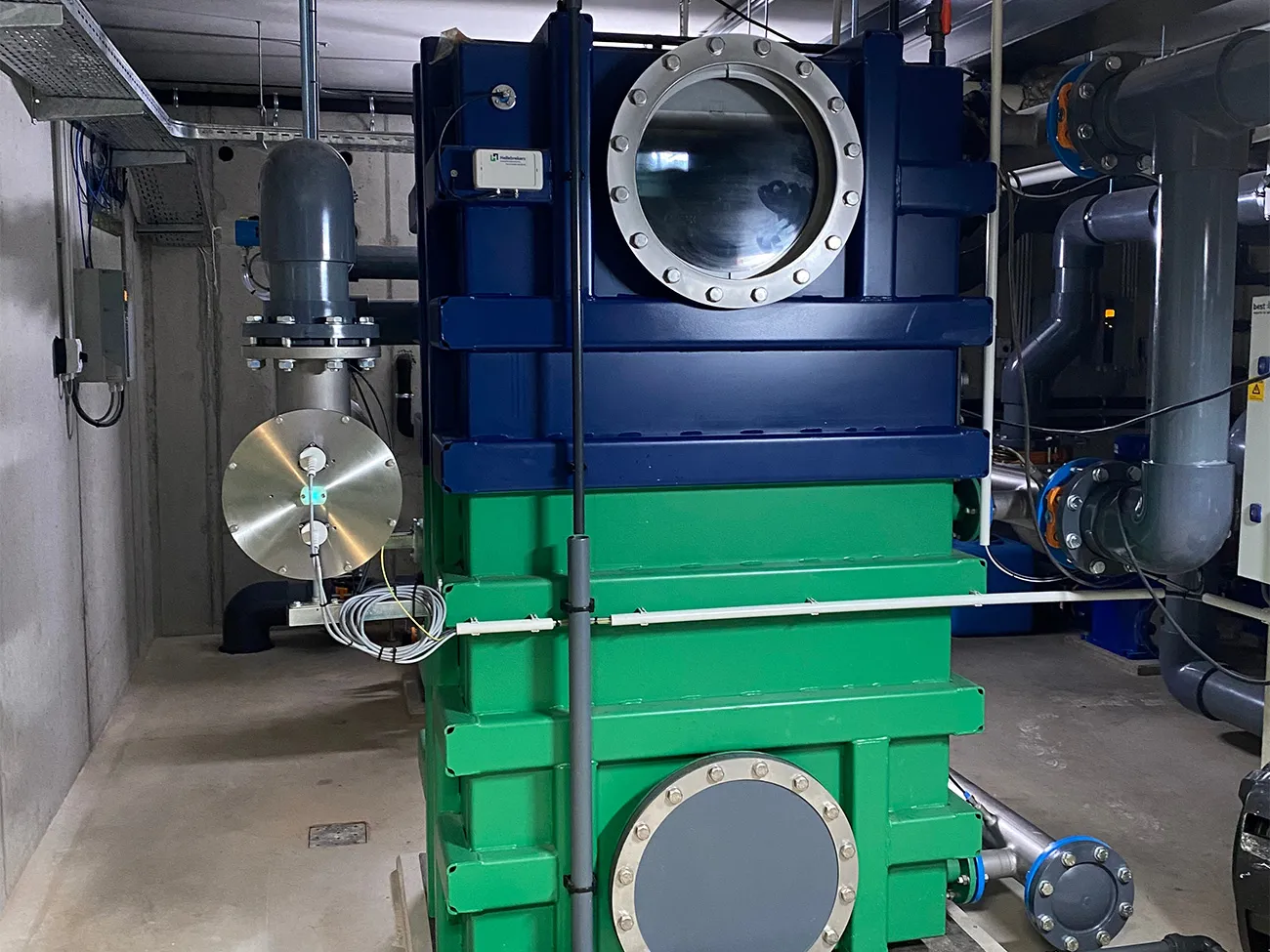
Swimming in clear, fresh water with a healthy water balance is essential for every swimmer. As a pool builder, you are responsible for water quality and user safety. Piscine Design spoke to Lennart Dokter, project manager specialising in water treatment at Hellebrekers. He explains the aspects to consider.
To achieve and maintain healthy, safe pool water, constant monitoring and cleaning are essential. Lennart Dokter, project manager at Hellebrekers, explains what this involves.
Hellebrekers is a versatile installation company based in the Netherlands, and an international leader in industrial automation and pool installations. Specialising in water treatment systems, climate control systems and energy-efficient technologies, its “water & leisure” division provides solutions for swimming pools, wellness centres, leisure facilities and (mega)yachts.
“Every sector has specific requirements. Think of megayachts, where we install three, four or five pools, or the demanding environment of a wellness centre. At Hellebrekers, we have the expertise to meet these particular needs,” says Lennart Dokter.
Water filtration and circulation
The preferred filtration method for achieving optimal water quality depends largely on the pool and the number of visitors.
“Drum filters are particularly interesting,” says Lennart Dokter. “They pre-filter large insoluble impurities from the water, making things easier for the sand filters further along the water treatment process. Using a drum filter can, among other things, deliver substantial savings in water and energy consumption. Pre-filtration with drum filters also extends the service life of the sand filters, as they stay cleaner and need to be cleaned less often.”
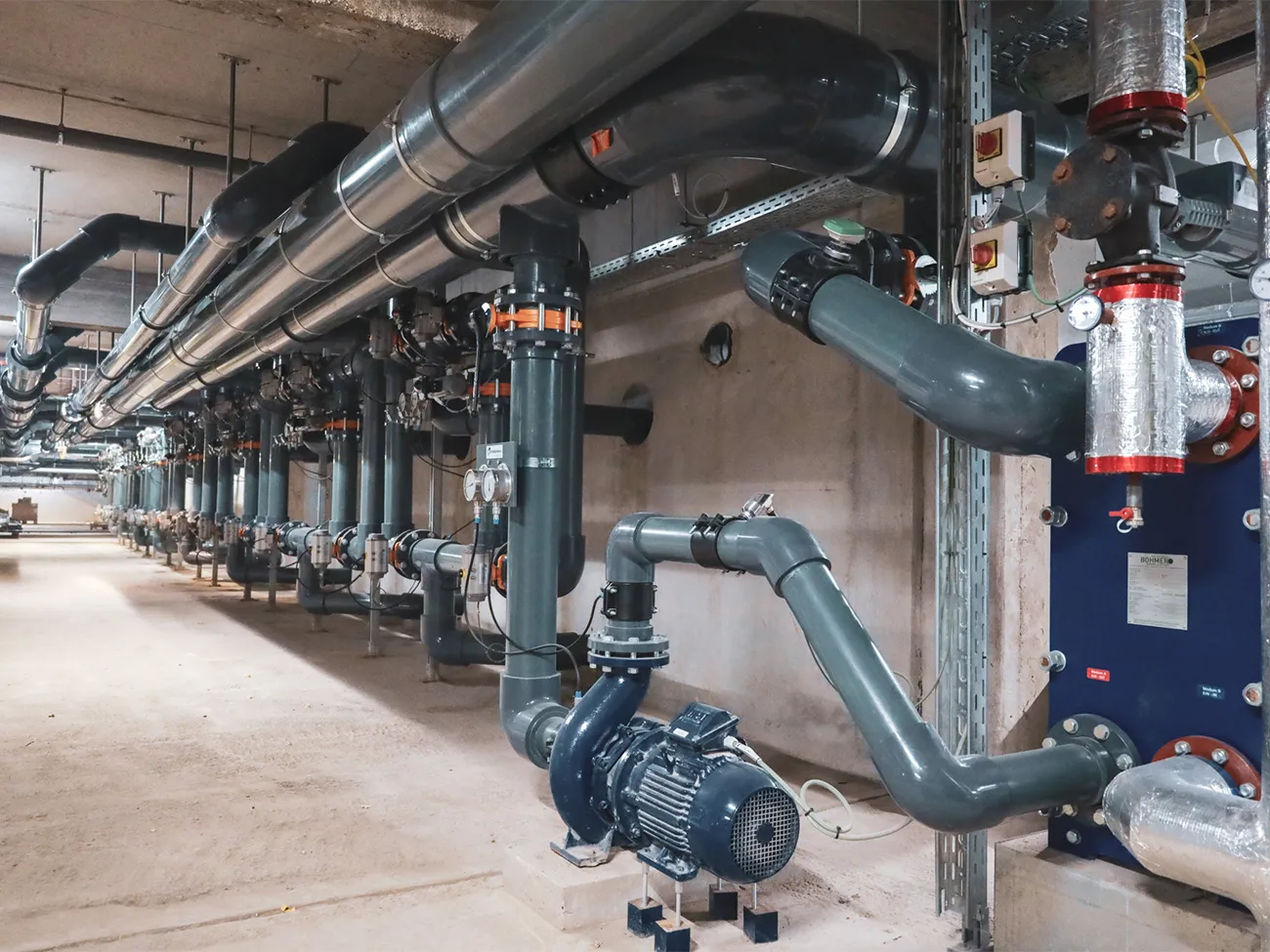
Good circulation is the basis of effective water treatment in swimming pools. Water flow is essential to the treatment process. Circulation also distributes disinfectants more evenly throughout the pool water, which warms up more quickly as well. “When it comes to circulation, the aim is to create as little resistance as possible in the pipes. This makes the pipework more energy-efficient.”
Disinfection
Disinfection is, of course, essential to balanced water treatment. It removes algae, bacteria and pathogenic micro-organisms from the water, leaving it clear.
“There are several ways to disinfect water effectively,” explains Lennart Dokter. “The best-known method is chemical disinfection with chlorine. Chlorine is added either by means of a dosing pump or, particularly in smaller pools, using chlorine tablets.”
Another common disinfection method is salt electrolysis. In a tank, a saline solution is separated into sodium and chloride using membrane technology. The chlorine is then pumped into the pool water as a disinfectant. “This has an environmental benefit: as the chlorine required is produced on site, storage and transport costs can be saved.”
At present, UV light is the best way to disinfect pool water. Irradiating the water neutralises bacteria, viruses and other micro-organisms, preventing them from multiplying. It also breaks down combined chlorine in the pool.
“Chlorine is still mandatory at present, and UV disinfection takes place only in the plant room, not in the pool. In future, we will have to significantly reduce our use of chemicals, which is why this technology is gaining ground. Using UV disinfection and ultrafiltration, Hellebrekers is currently building its first chlorine-free indoor pool. We already knew these principles from swimming ponds and similar settings, but a chlorine-free installation in a public indoor pool is a highly innovative system.”
Sustainability as an investment
Overall, the latest trend in pool water treatment is the search for energy-efficient solutions.
Lennart Dokter: “We are seeing sustainability become, at times, more important than construction and operating costs. At Hellebrekers, we are increasingly entering into agreements under which we commit to maintaining the pool installations we build for a period of 30 years. In some cases, these also include guarantees on energy consumption. The focus is increasingly on the future. The aim is therefore to invest in high-efficiency installations to reduce costs in the long term.”
Saving water
It is not just energy costs that can be reduced: there is also a growing focus on water recovery.
“Many swimming pools discharge unnecessary quantities of rinse water, used to clean the filters, into the sewer,” explains Lennart Dokter. “UFRO purifies 70% of the rinse water so it can be used to refill the pool. All these measures add up to a huge difference in your consumption.”
Cleaning a dirty pool filter also generates heat. “We are now achieving 100% efficiency in heat recovery. Cold make-up water, at around 10 degrees Celsius, is brought up to the correct pool water temperature using a heat recovery system. Wastewater from filter rinsing is used as a heat source. It closes the loop.”
Question about this story? Ask your question
Keep following this
Get an email when a new story is published. No account needed.
- ThemeWater quality management
- SubjectWater treatment