








Meticulous installation down to the smallest detail
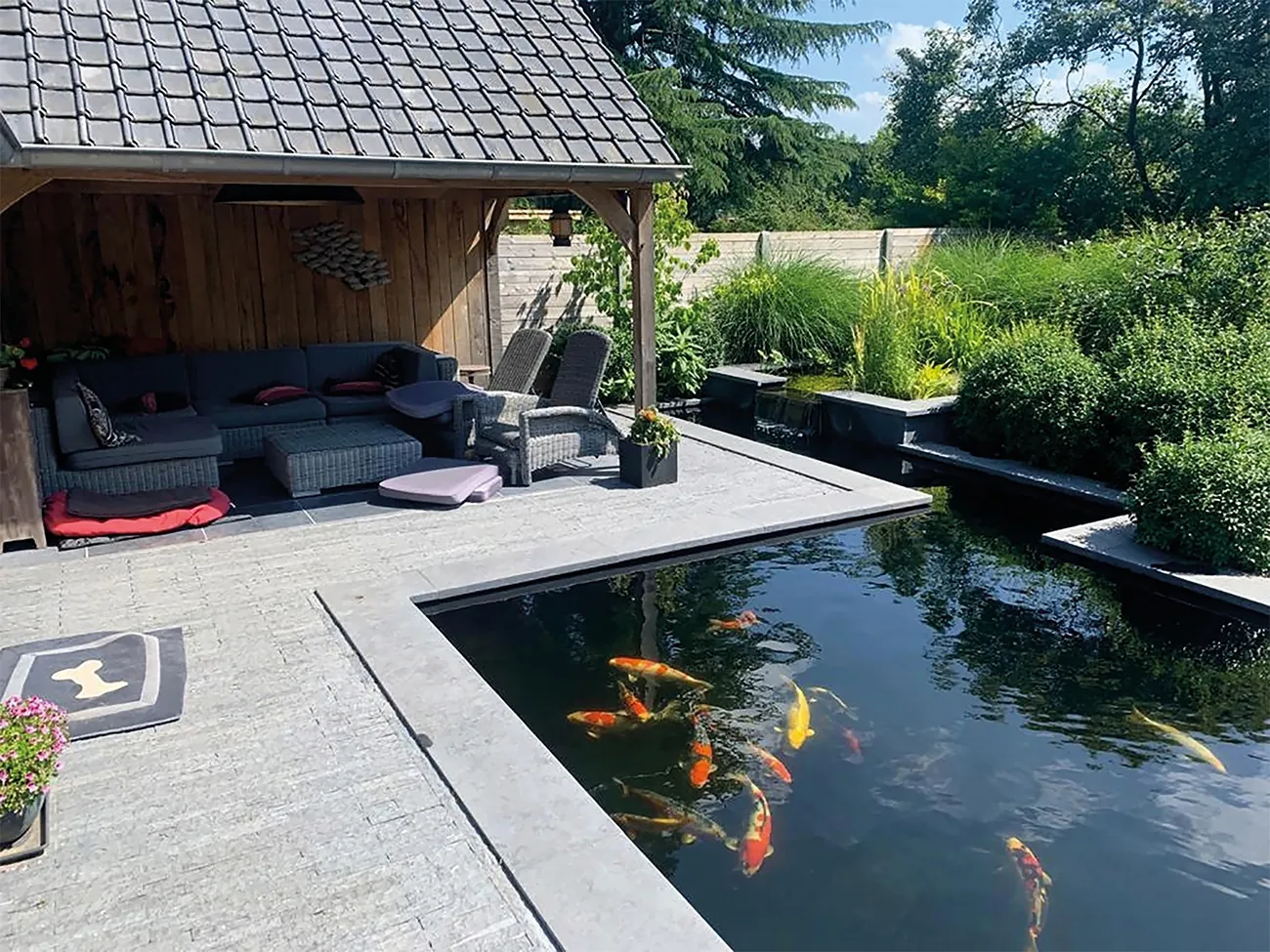
Materials used in and around a swimming pool often need to meet specific requirements, some more obvious than others. We all know that pool coping stones and steps need to provide sufficient slip resistance, but not everyone is aware of the impact that electrolysis-based water treatment systems can have on limestone, for example.
“There are still a number of hidden or at least underreported points to consider,” says Els Meynen of garden materials supplier E.L.S. Garden. “We or our customers have had to discover some of them through trial and error, but in most cases, you can work out a lot if you have the necessary knowledge of the products and materials. When we supply products for inside or around the pool, we are very happy to share this knowledge.”
Measuring and adjusting
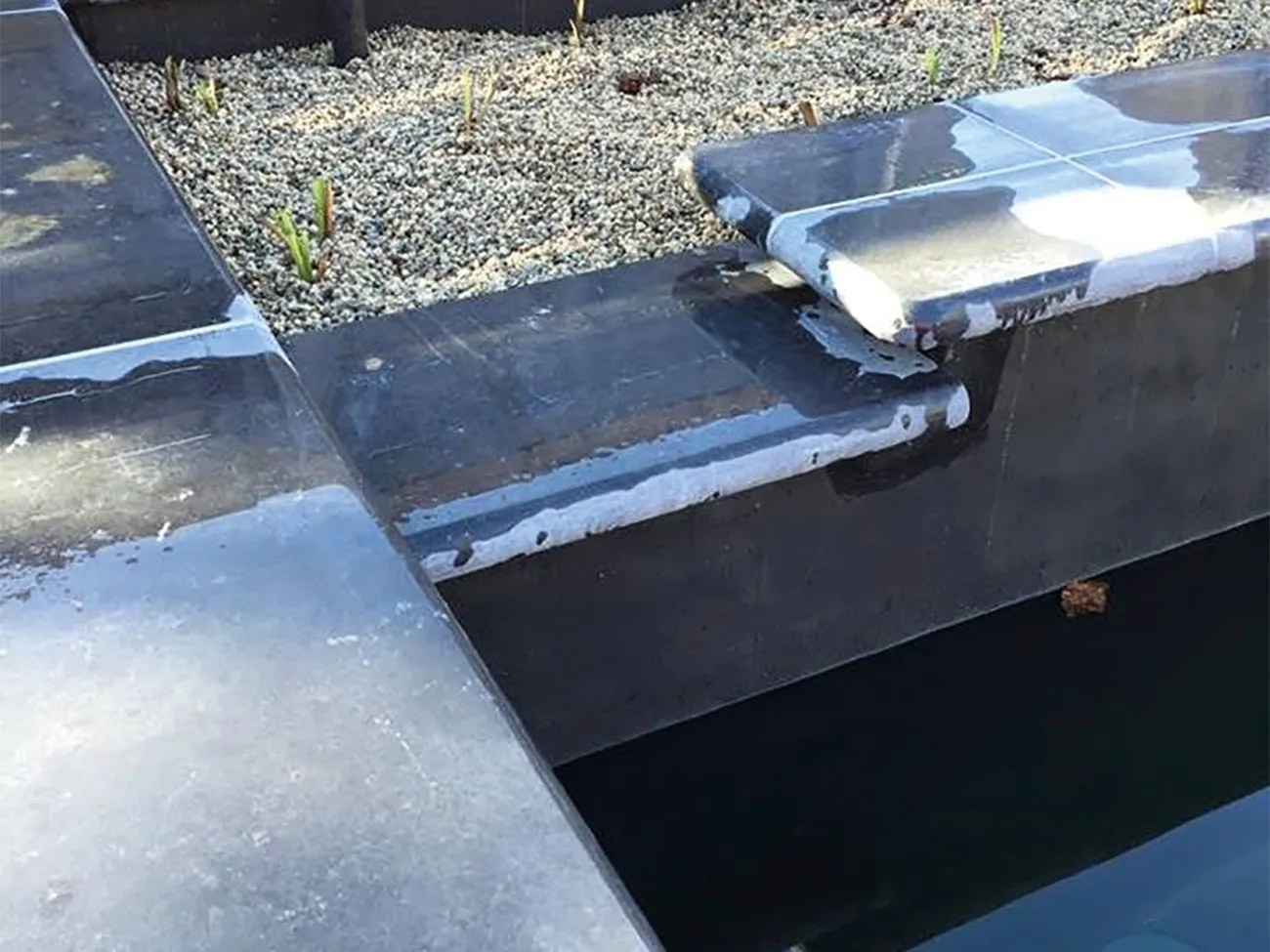
There is certainly a wide choice of materials for pool coping stones. Granite, limestone or ceramic: all these materials can provide an attractive and safe finish to the pool edge, with a straight or rounded edge. “The material itself is not the most important consideration for pool coping, but the geometry is. A pool is not designed around the dimensions of the coping stones available. The coping stones need to be adapted to the dimensions of the pool. This sometimes calls for a little thought, adjustment and possibly cutting.”
“For example, to achieve an attractive, uniform finish, you want to avoid having to insert a small 20-centimetre section between every 100-centimetre coping stone. To make things easier, alongside the standard sizes we also offer a wide range of corner and adjustment pieces in all materials. This allows you to match the selection more closely to the specific dimensions of the pool. You may still need to cut a few pieces here and there, but a 112-centimetre section between 100-centimetre stones will look better than adding a 12-centimetre piece.”
Underwater
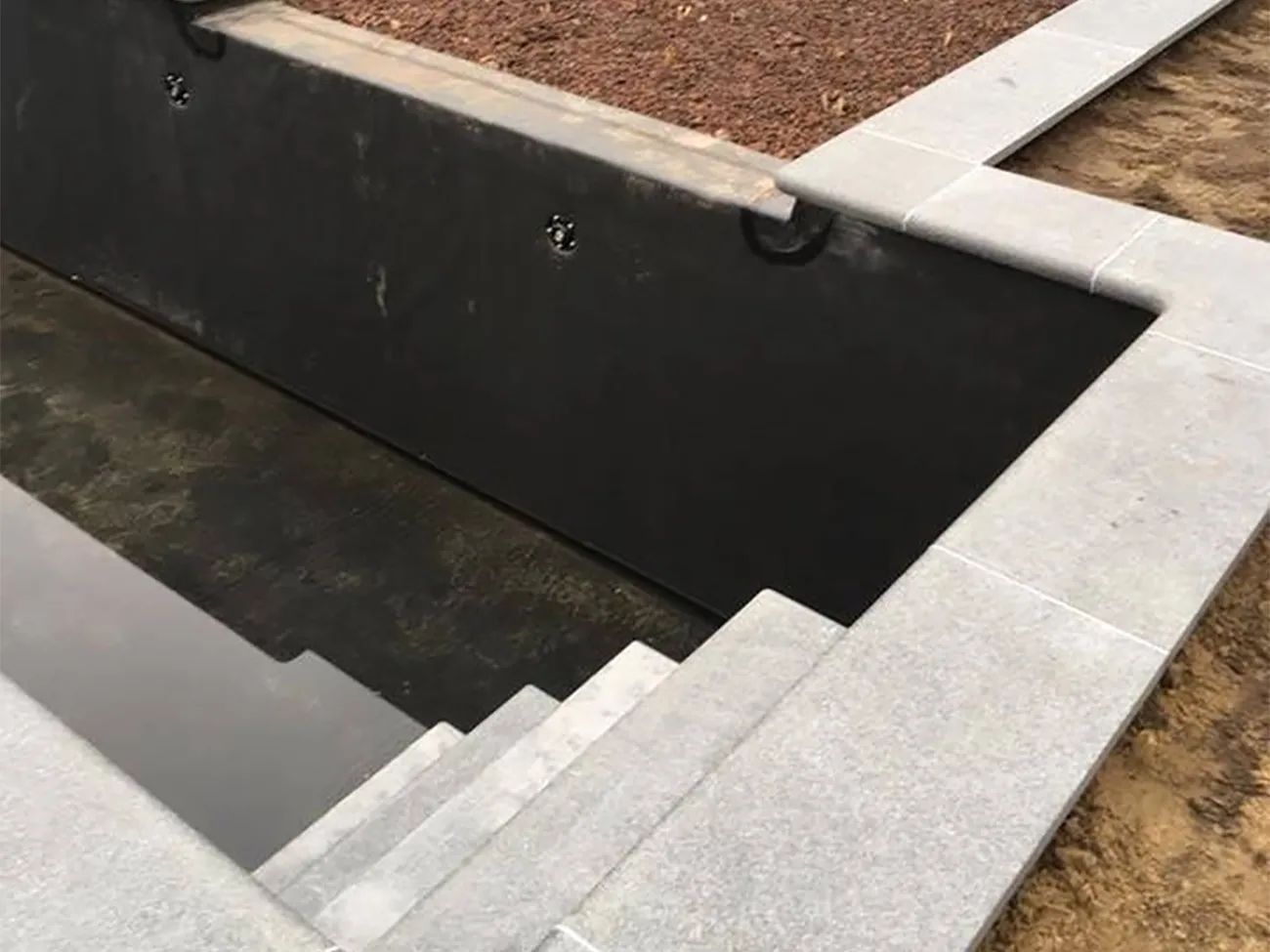
As well as pool coping stones, E.L.S. Garden also supplies the necessary coverings for pool steps and lounging areas. In the first case, these are standard elements, available with a rounded or straight edge; in the second, they are generally made to measure. They are always made from flamed or brushed G54 granite.
“There is a very specific reason for this,” explains Els Meynen. “These elements are constantly submerged in water that undergoes a certain treatment in a swimming pool. In the past, this involved conventional chlorine dosing, but electrolysis is now increasingly common. These systems also affect the acidity of the water, which can have a particularly negative impact on limestone. It will deteriorate more quickly in this kind of environment. Granite is less susceptible and therefore offers greater reliability for underwater applications.”
Grouting and bonding
Granite treads are made to measure for standard polyester pool steps. They are installed using adhesive. “Cement simply will not adhere to polyester steps because this substrate does not absorb moisture. So you have no choice but to bond the treads in place. The same applies when you need to install coping stones or other stones on a pool liner.”
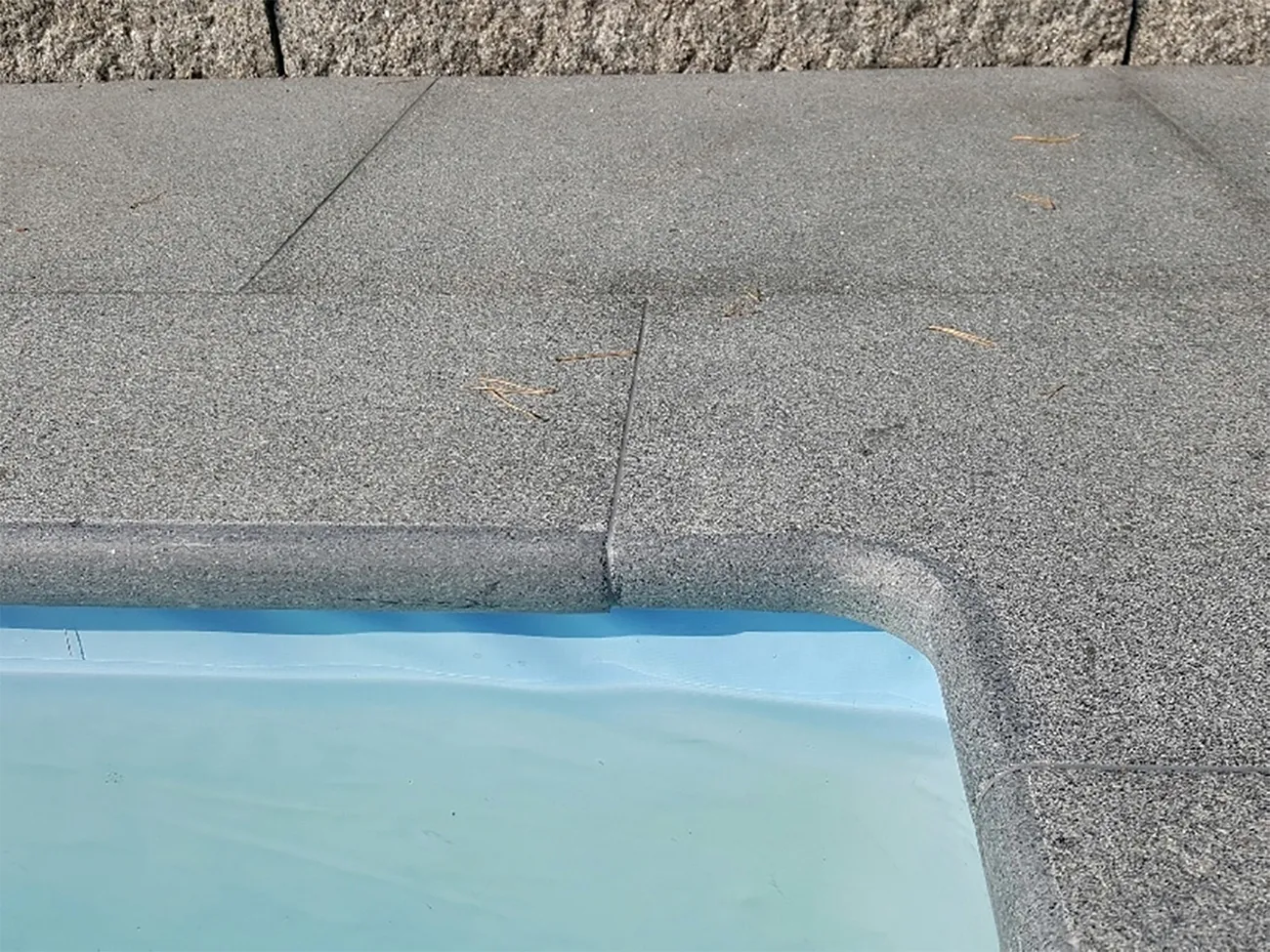
A common point to watch when grouting pool coping stones, Els Meynen notes, is the edge. “Granite and natural stone traditionally have cement joints, but repeated exposure to water will eventually cause the cement to crumble at the edge. Ceramic coping is even more difficult, because the edges of these stones are usually untreated, so the cement has nothing to grip. The alternative, using jointing sand, is no solution for an open detail such as the edge.”
Regardless of the material, E.L.S. Garden therefore recommends a siloxane-based grout for finishing pool edges. “It adheres well to different materials, does not shrink but has plenty of elasticity, and stands up well to the effects of water. This ensures that pool coping is durable and finished meticulously down to the smallest detail.”
Question about this story? Ask your question
Keep following this
Get an email when a new story is published. No account needed.
- SubjectNews